Адреса:
7, Стецьківська вул., місто Суми, Сумська область, 40491, Україна
Адреса:
7, Стецьківська вул., місто Суми, Сумська область, 40491, Україна
Ideas shaping Ukraine’s future
Ideas shaping Ukraine’s future
E.M.A. LLC is a Ukrainian engineering and manufacturing company with more than 18 years of experience in developing modular industrial engineering systems.
The company operates as a full-cycle system integrator: it develops engineering architecture, performs 3D layout design, designs internal engineering systems, instrumentation and control systems, and automation, manufactures containerized modules, integrates process equipment from specialized manufacturers, conducts factory testing, commissioning, personnel training, and provides ongoing service support.
E.M.A. brings together more than 50 specialists, over 4,000 m² of production facilities, in-house engineering and R&D capabilities, and an ISO 9001:2015 quality management system. The company’s experience includes containerized compressor stations, autonomous diesel-generator modules that became particularly relevant during the first major blackouts in Ukraine, oxygen systems for healthcare facilities during COVID-19, modular boiler systems, and other solutions designed to support facility operations under conditions of unstable access to critical resources.
Water Resilience Network has completed an internal Pre-FEED engineering stage. The core technological architecture, container module design, target capacity, water treatment sequence, key operating parameters, and investment model have been defined. The engineering platform is based on proven serial components from specialized manufacturers, integrated by E.M.A. into a single autonomous module with its own power supply, control, automation, and monitoring systems.
E.M.A. LLC serves as the integration platform for Water Resilience Network, bringing together:
E.M.A. provides system engineering, equipment integration, automation, module manufacturing, production facilities and capacities, engineering and manufacturing personnel, warehouse infrastructure, logistics support, operator training, commissioning, and ongoing service support.
Regional challenges
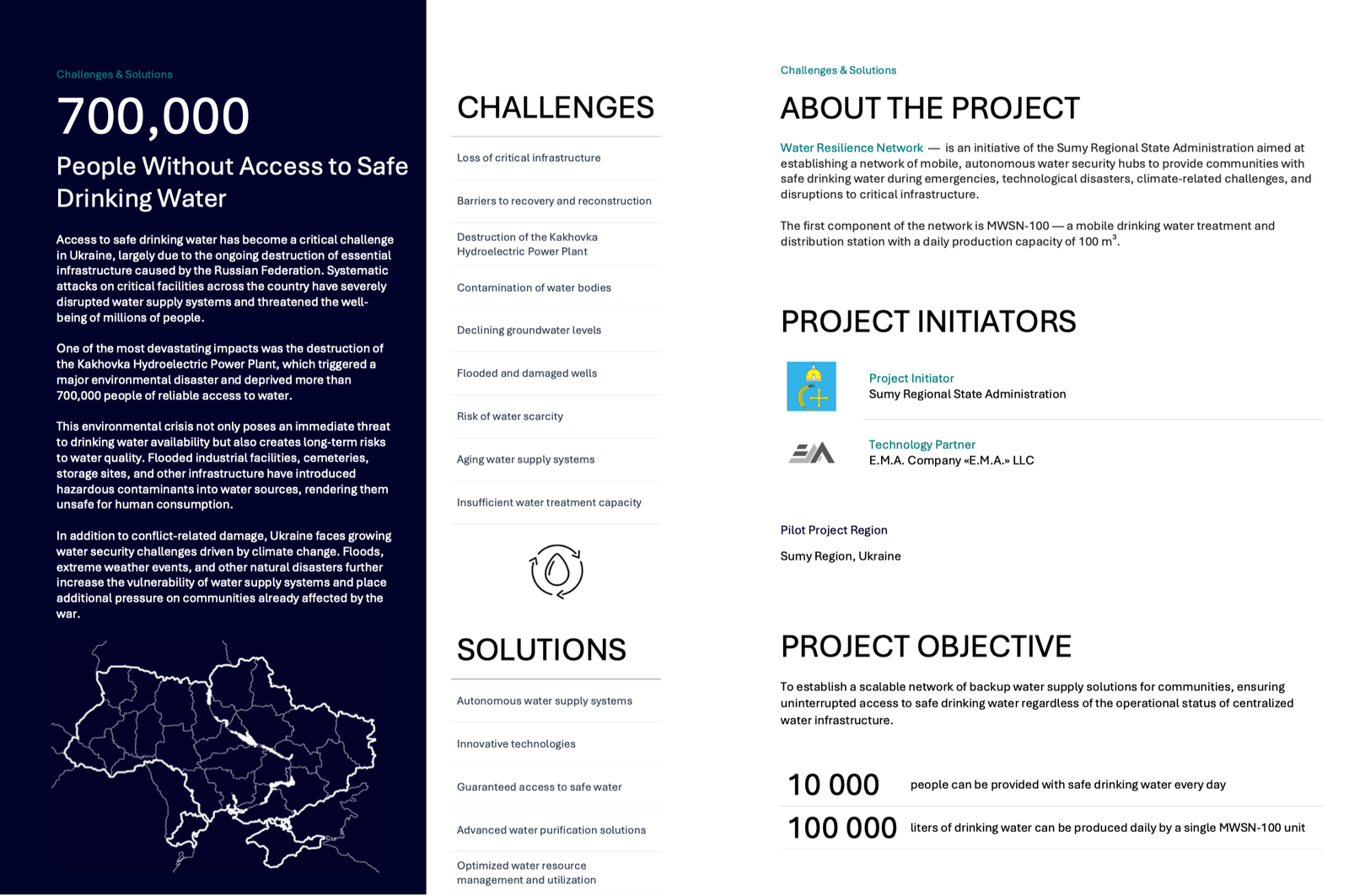
Continuous access to safe drinking water is a fundamental function for any municipality, and one of the key elements of civil protection.
Centralized water supply systems depend on water intakes, power supply, pumping stations, water treatment facilities, and distribution networks. Damage to or failure of a single critical component can simultaneously restrict access to water for a significant number of people.
For Sumy oblast and Ukraine as a whole, this challenge has a practical dimension. Sumy oblast comprises 51 territorial hromadas and 1,490 settlements with different water supply structures, water sources, and levels of dependence on centralized engineering infrastructure. Energy disruptions have already resulted in power outages at water intakes and pumping stations, transitions to backup power, restricted water supply schedules, and temporary alternative water provision to the population.
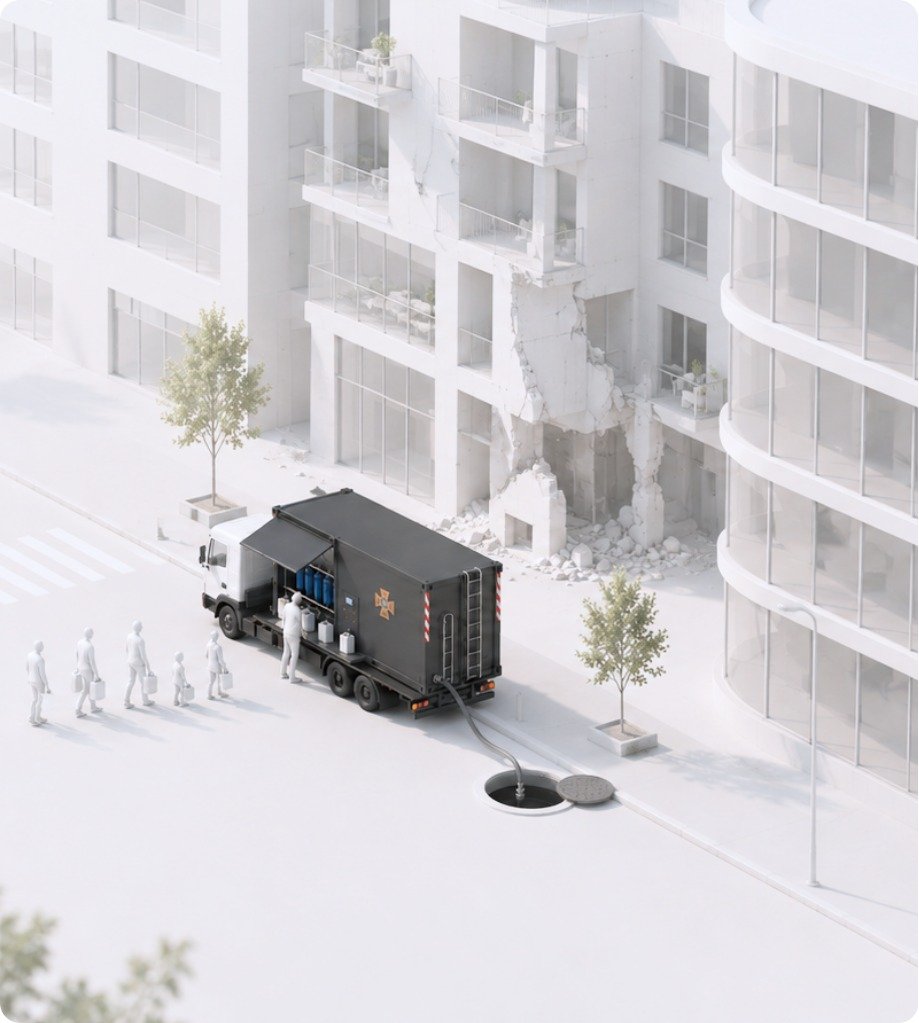
The region requires an independent mobile reserve capacity that can be rapidly deployed to the location of actual need, operate autonomously from damaged infrastructure, and ensure controlled production of safe drinking water.
This capacity will be provided by the Water Resilience Network.
Water resilience network
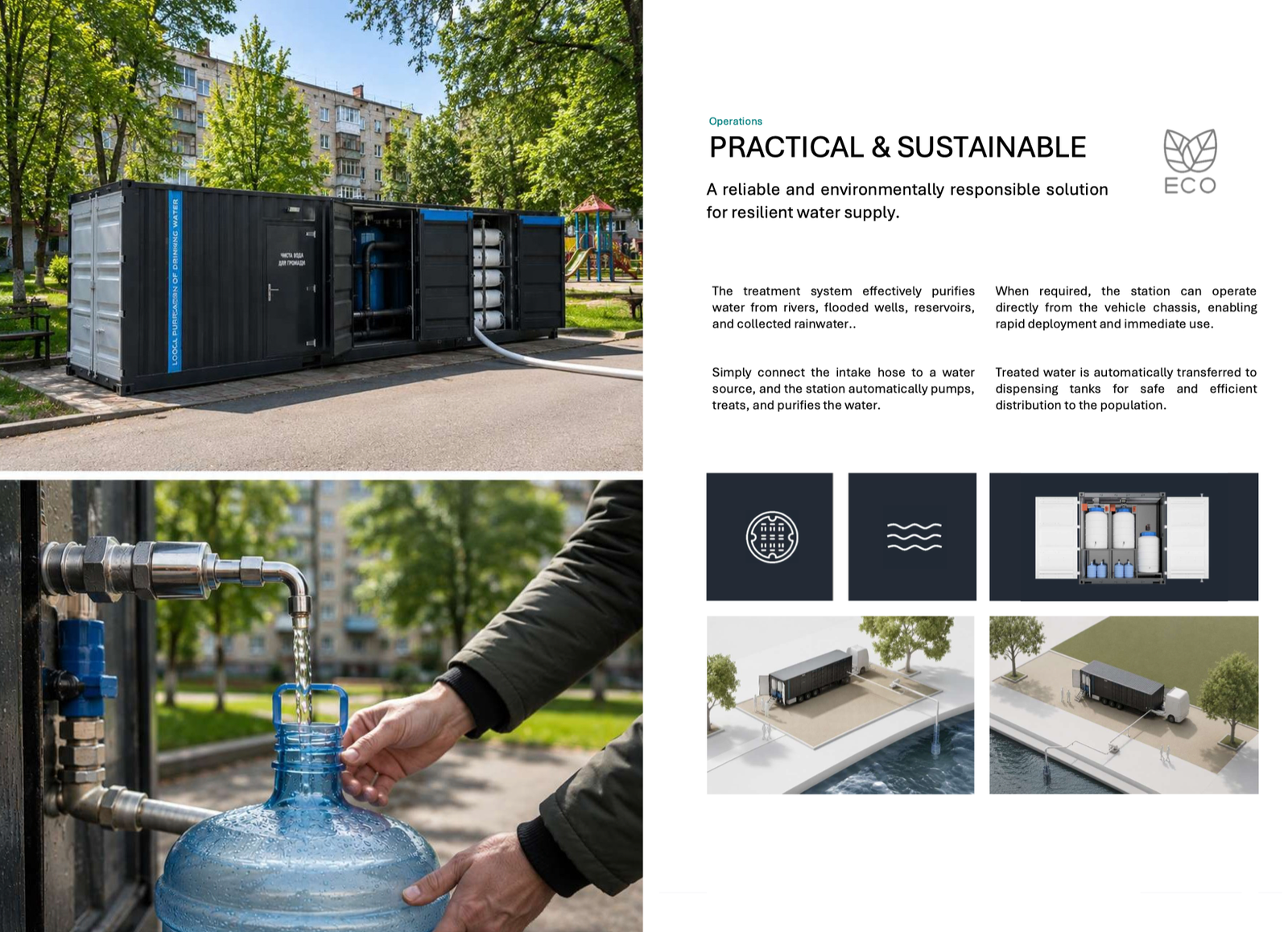
Water resilience network is a network of autonomous Mobile Water Supply Nodes — MWSNs — integrated into the regional preparedness and emergency response system.
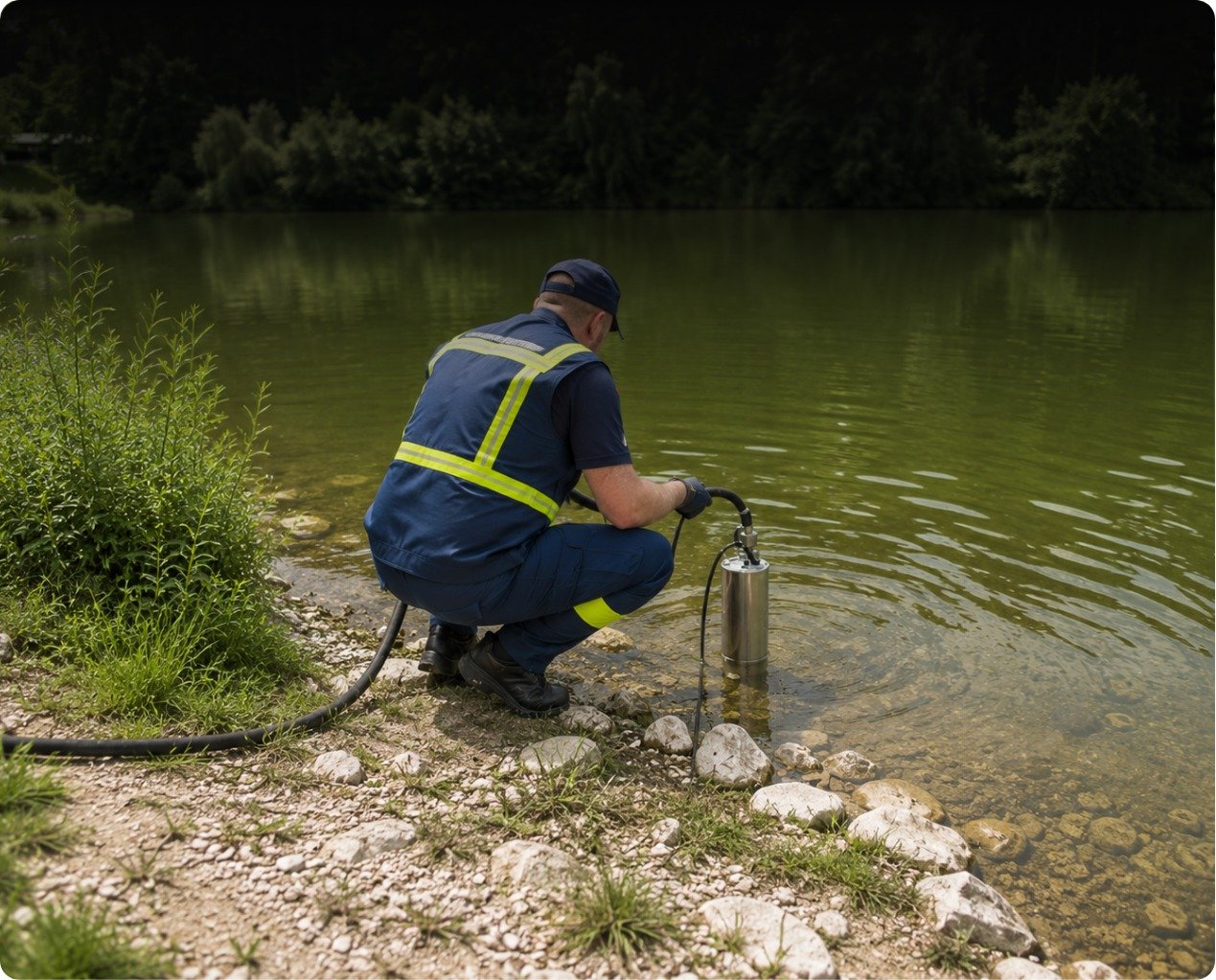
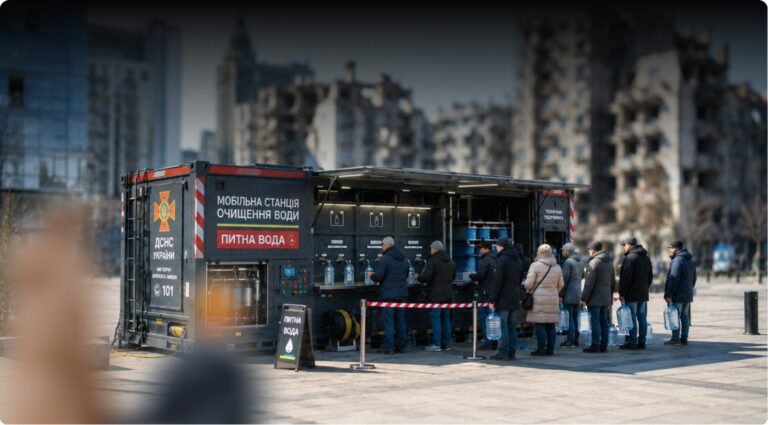
MWSNs are stationed at designated locations and redeployed according to actual demand. Priority deployment is determined based on population size, criticality of facilities, availability of water sources, condition of local infrastructure, logistics, energy conditions, and response time. A single mobile asset can sequentially serve different communities and emergency scenarios without the need to build separate stationary backup infrastructure for every settlement.
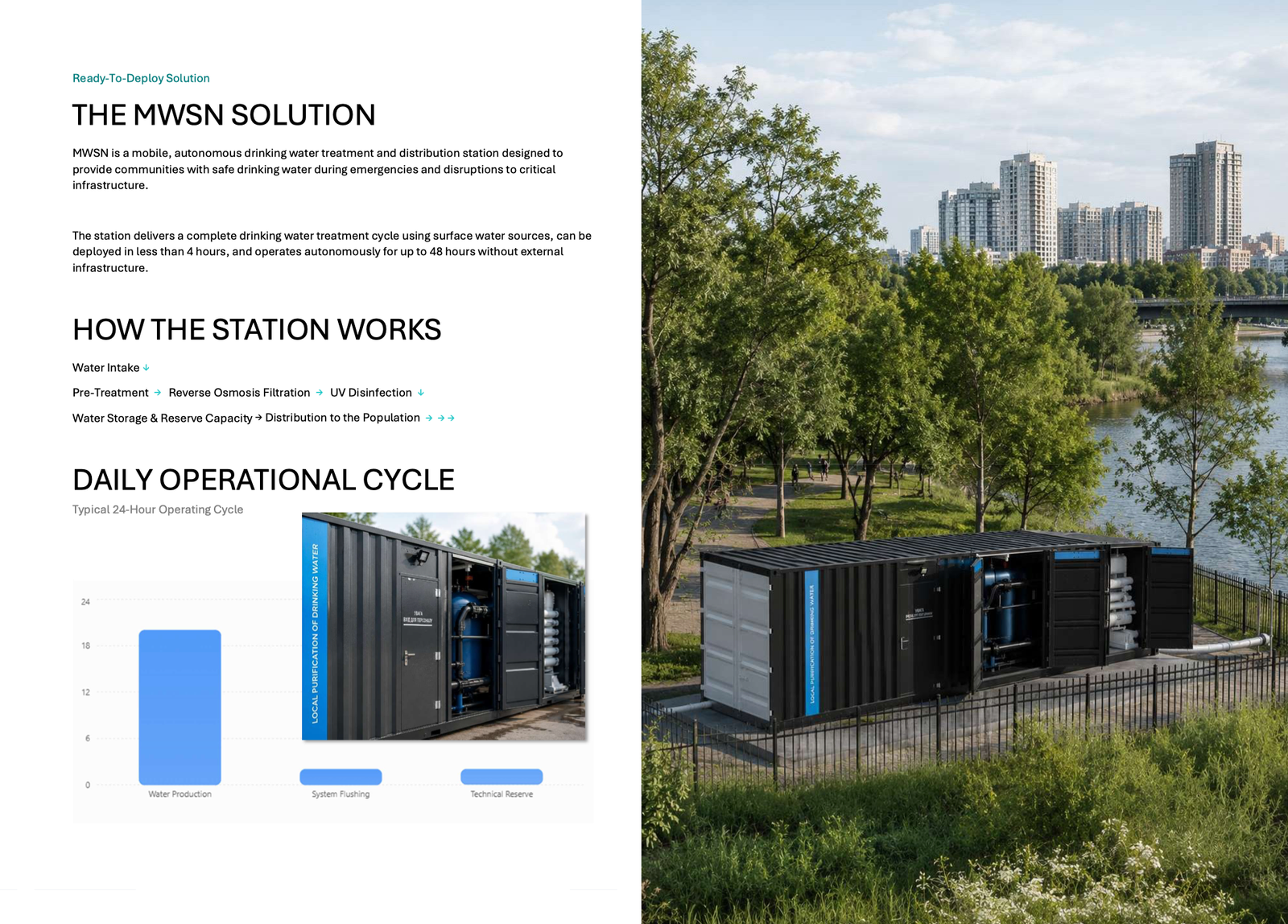
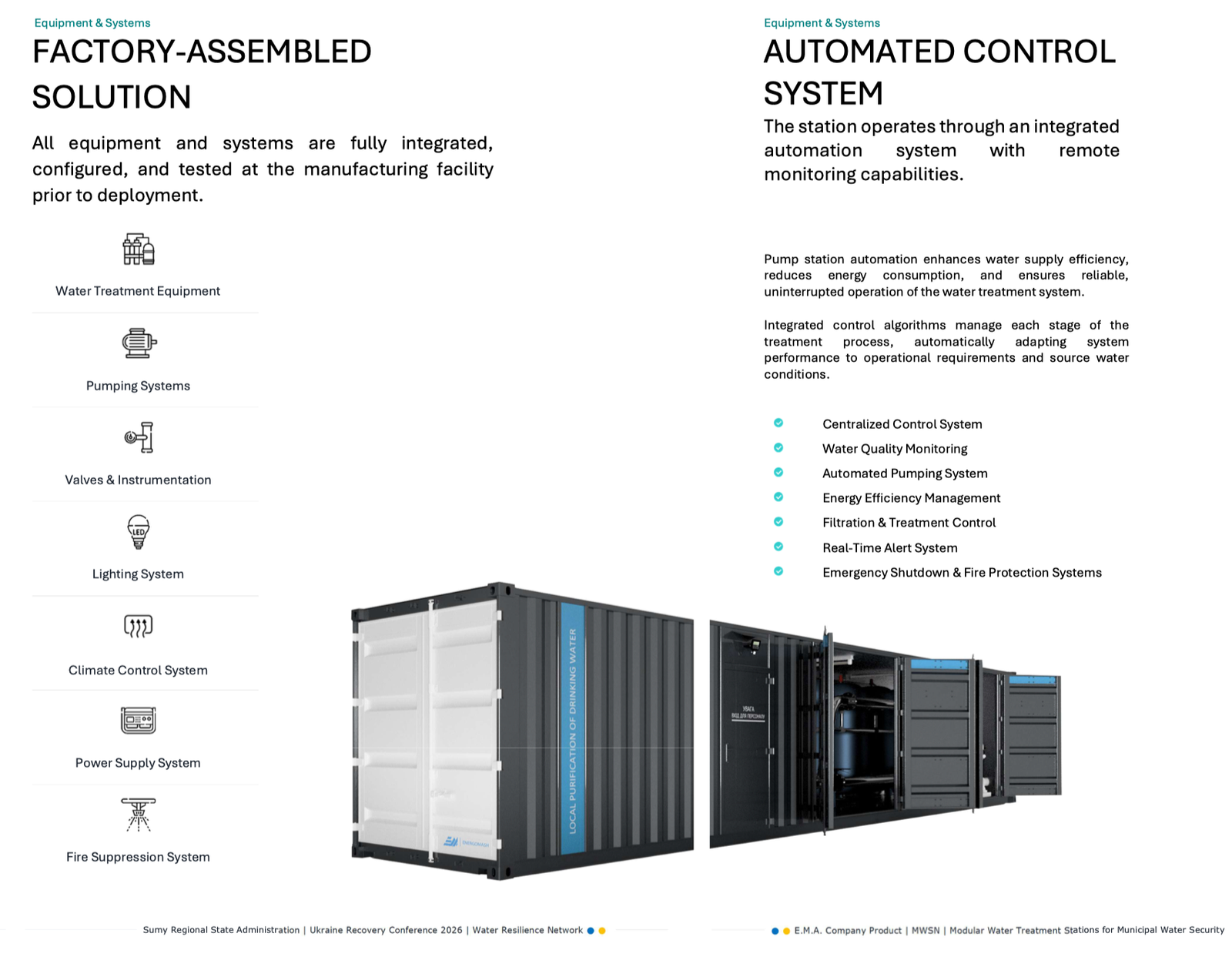
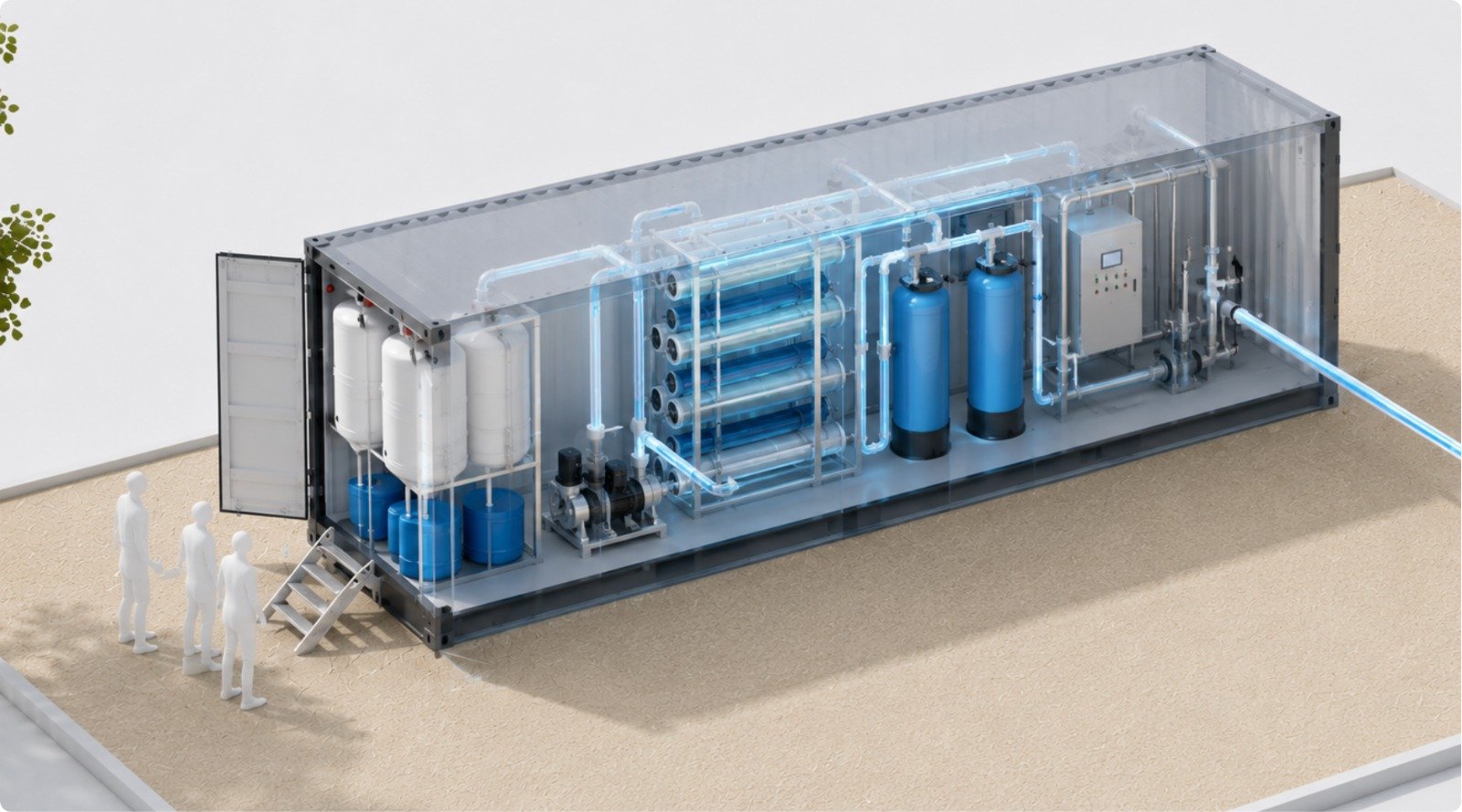
Each MWSN is designed in a 20-ft High Cube container with a maximum degree of factory readiness and a Plug & Play architecture.
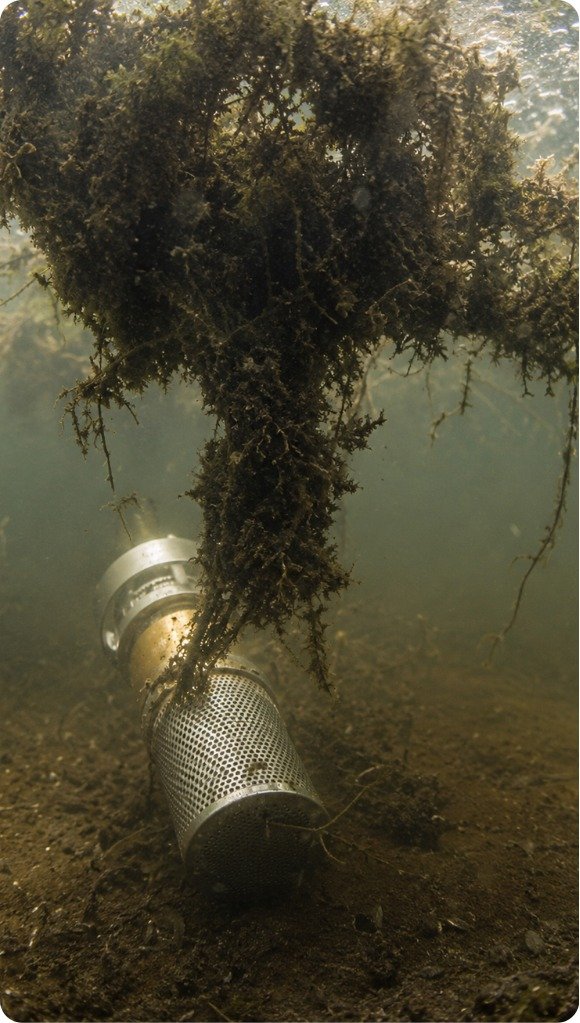
The treatment process includes raw water intake → pre-treatment → ultrafiltration → reverse osmosis where required → UV disinfection → final disinfection → treated water storage and distribution.
The system includes pumping and membrane equipment, chemical dosing systems, instrumentation, PLC/SCADA, power supply, climate-control systems, an autonomous diesel generator, and equipment for water connection and distribution.
Key parameters:
At an operating regime of 20 hours per day, one MWSN with a capacity of 10 m³/h produces ≈200 m³ of drinking water per day, which, based on an emergency benchmark of 15 litres per person per day, provides basic water supply capacity for ≈13,300 people per day.
Water supplied to consumers complies with applicable Ukrainian sanitary requirements. The system is also aligned with the principles of EU Directive 2020/2184 and the WHO Guidelines for Drinking-water Quality. Quality control covers the entire process — from raw water assessment and selection of the appropriate treatment mode to verification of the quality of the finished drinking water.
Beneficiaries and operating model
The primary beneficiaries of Water Resilience Network are territorial communities in cases where normal water supply is disrupted or restricted.
Priority facilities include hospitals, social institutions, shelters, educational facilities, collective accommodation sites, and critical municipal infrastructure.
Operational MWSNs are integrated into the regional civil protection system and placed at the disposal of designated services — the State Emergency Service of Ukraine (SES/DSNS) or another responsible authority — which determines priority deployment based on the actual situation.
Operational cycle: service disruption detected → needs assessment → water source identified → MWSN activated → transportation → deployment → raw water analysis → treatment mode selection → drinking water production → quality control → distribution to consumers → digital monitoring.
Three-year implementation programme
Stage 1 — First operational unit and verification
Detailed engineering, final component specification, production of the first MWSN, FAT, commissioning, field testing, laboratory verification, operator training, implementation of standard operating and service procedures, and launch of digital monitoring. The result is a fully verified and certified operational unit and a standard for serial production.
Stage 2 — Regional deployment
Serial production of MWSNs, establishment of deployment bases, logistics routes, and operational teams, identification of emergency water sources and critical facilities, creation of a stock of critical components, and implementation of a unified digital monitoring system.
Stage 3 — Regional network and scaling
Establishment of the required territorial coverage, unified operation and service standards, and accumulation of data on response time, water production volumes, quality, technical availability, and operating costs. Based on the resulting data, a replication package is created for scaling the model to other regions of Ukraine and beyond.
Key KPIs: 100% compliance of supplied water with established requirements; start-up within 4 hours after arrival; output of 10 m³/h in Standard Mode and 7 m³/h in Enhanced Treatment Mode; technical availability ≥95%; 100% trained operators and controlled deployments.
Investment and partnership model
The estimated cost of one fully operational MWSN is €174,000.
This is a turnkey budget for an operational asset and includes equipment, containerization, engineering integration, automation, deployment kit, logistics, commissioning, digital monitoring, training, an initial stock of critical components, warranty, and service support.
To maintain continuous operational readiness, an annual planned service and preventive maintenance budget of 3–5% of CAPEX, or €5,200–8,700 per MWSN, is allocated, excluding the variable costs of a specific emergency deployment. The basic structural and mechanical systems are designed for a service life of at least 15 years.
Water Resilience Network is implemented as a partnership platform: E.M.A. provides system engineering, integration, manufacturing, automation, testing, training, and local service; international donors support the development and scaling of the network; international technology manufacturers supply specialized components; communities and regional authorities define needs and the operating model; and the SES/DSNS and other emergency services ensure operational deployment.
Following the investment cycle, the region retains not only physical assets, but also trained personnel, Ukrainian manufacturing and service capabilities, standardized procedures, digital operational data, and a ready-to-scale model.
From CAPEX to regional capacity
Water Resilience Network creates a regional infrastructure capability that enables safe drinking water production to be moved directly to the location where it is needed.
Sumy oblast becomes a demonstration region for the practical implementation of mobile water resilience, with subsequent scaling of the model across Ukraine.
For E.M.A., the project continues the company’s systematic focus on modular solutions for critical challenges: oxygen during COVID-19, autonomous power during major electricity disruptions, and decentralized heat for difficult winter periods.
Reliable access to safe drinking water is the next element of infrastructure resilience. Water Resilience Network provides this readiness at the municipal and regional levels.