Адреса:
7, Стецьківська вул., місто Суми, Сумська область, 40491, Україна
Адреса:
7, Стецьківська вул., місто Суми, Сумська область, 40491, Україна
Ideas shaping Ukraine’s future
Ideas shaping Ukraine’s future

Sumy central city clinical hospital is a core multidisciplinary facility in Sumy oblast with a history of more than fifty years, proposes to expand rehabilitation care by establishing a Regional Center for Comprehensive Medical Rehabilitation on its own clinical base, including for patients with limb amputations; to equip the Center with modern rehabilitation equipment (robotic rehabilitation systems, virtual reality (VR) and augmented reality (AR) systems, and devices for modern physiotherapy and stimulation); and to open a prosthetics workshop.
The project provides for the development of several interrelated areas: neurological, cardiac, orthopedic and post-traumatic rehabilitation. We also plan to develop additional specialized areas, the relevance of which has grown particularly in wartime conditions and given the long-term consequences of the war.
These include oncological rehabilitation, rehabilitation for people with acquired vision and hearing impairments, and rehabilitation after amputations.
Target audience
Civilians with general illnesses who need medical rehabilitation (consequences of injuries, strokes, myocardial infarctions, chronic pain, neurological disorders). Veterans and civilians who need comprehensive long-term rehabilitation after military injuries and related conditions. Civilians injured as a result of hostilities. Civilian patients with injuries, including those that resulted in the loss of limbs. Cancer patients after systemic drug treatment and radical surgery. Patients with acquired sensory impairments of hearing and vision.
The Center will complete the patient pathway: from saving a life in the acute period to the fullest possible recovery, close to home and loved ones.
This is not an investment in an idea without a practical foundation, but in strengthening an operating institution that has been tested by war. The hospital has a clinical base, a team, and an established patient flow, but its existing space does not allow it to deploy a modern model of comprehensive rehabilitation. This is the gap the project is intended to close.
| Planned inpatient capacity of the Center | ~105–130 beds |
| Rehabilitation areas | Neurological, cardiac, orthopedic and post-traumatic, sensory (hearing, vision), oncological rehabilitation |
| Target annual patient flow | 3 850–4 350 people |
| The hospital’s clinical base | 17 inpatient wards with a bed capacity of 365 beds; more than 20 thousand patients treated annually. Modern diagnostic base. |
| Model | The Center is integrated into the hospital’s organizational structure and relies on its diagnostic, surgical, and specialized centers |
Sumy central city clinical hospital:
Over the decades, the hospital has built a professional school, developed specialized medical areas, introduced modern technologies, and met the most difficult challenges faced by medicine in the region. Today it is a powerful multidisciplinary facility that combines experience, professionalism, technological capabilities, and a readiness for continuous development.
The hospital’s mission is to provide people with access to high-quality, timely, and high-tech medical care, to save lives, to restore health, and to uphold the dignity of every patient.
| Scale and capacity | |
| Staff | 827, of whom 491 are medical staff and 165 are physicians, including 2 Doctors of Medical Sciences and 4 Candidates of Medical Sciences |
| Medical specialties | 53, of which 21 are surgical |
| Inpatient care | 17 wards (7 surgical), 365 beds with round-the-clock stay, powerful diagnostic base |
| Inpatient capacity | More than 20 thousand patients treated |
| Outpatient network capacity | More than 230 thousand visits per year |
| Clinical diagnostic laboratory capacity | More than 1 million tests per year |
| High-precision radiology | More than 60 thousand examinations per year |
| Surgical capacity | More than 10 thousand surgical interventions annually |
The hospital’s main source of funding is its contract under the Medical Guarantees Program, which provides a stable operating basis for the institution. It covers 21 packages of medical services, 5 of which are critically important priority areas.
Physician staffing stands at 72.2%, and staffing of mid-level medical personnel at 84.8%, so developing competencies and attracting the necessary specialists is an integral part of the project.
Resilience tested by war
The hospital has not stopped working since the start of the full-scale invasion in 2022. On the very first day of the war, its specialists received wounded people from the city’s streets, where fighting was ongoing. During the most dangerous periods, the hospital provided care to civilians and military personnel, stabilized the severely wounded, and ensured the continuity of medical evacuation. Even after its premises were damaged by shelling of the city, the hospital found ways to recover and continued to operate.
More than 5,000 military personnel received care at the hospital in 2022–2025. The number of civilian patients injured as a result of shelling of Sumy city and the surrounding areas is also growing every year:
| 2022 | 2023 | 2024 | 2025 | First 9 months of 2026 |
| 10 | 20 | 58 | 148 | 264 |
Many of these people will need long-term recovery after the acute stage. And experience of working under conditions of high uncertainty testifies not only to professional competence but also to the organizational resilience of the team.
The Clinical base: a foundation for investment
The hospital has a powerful surgical base: 197 surgical beds and seven specialized wards, including general, vascular, and neurosurgery, urology, otolaryngology, gynecology, orthopedics, and traumatology. The hospital’s structure includes specialized functional centers: the Stroke Center, the Reperfusion Center for patients with acute coronary syndrome, the Arrhythmological Center, the Spine Surgery Center, and the Center for Modern Urology.
The range of high-tech care includes:
| Dynamics of key indicators | 2023 | 2024 | 2025 |
| Patients treated in the inpatient setting | 22 365 | 24 229 | 23 765 |
| Patients who received surgical treatment | 8 931 | 9 714 | 9 758 |
| Surgical interventions performed | 10 646 | 11 561 | 11 697 |
| Patients treated for acute stroke | 1 006 | 855 | 942 |
| Patients who received systemic thrombolytic therapy | 173 | 114 | 121 |
| Endovascular thrombectomies | 44 | 62 | 64 |
| Cerebral angiography | 152 | 187 | 191 |
| Patients treated for acute myocardial infarction | 414 | 320 | 326 |
| Coronary angiography | 1122 | 898 | 781 |
| Coronary stenting | 456 | 465 | 481 |
| Pacemakers implanted | 168 | 98 | 148 |
| Ablations (cryoablations) performed | 29 | 40 | 34 |
| Replacement of large joints | 348 | 332 | 234 |
dcd\
cs
Rehabilitation capacity is already in place. The hospital has an inpatient Rehabilitation Ward with 30 beds and an Outpatient Ward of Medical Rehabilitation. The team consists of 32 specialists: 6 physical and rehabilitation medicine physicians, 12 physical therapists, 7 physical therapist assistants, 5 occupational therapists, and 2 occupational therapist assistants. In 2025, 978 patients in the inpatient department and 799 patients in the outpatient department received care.
Patients after stroke, complex surgeries, myocardial infarction, and severe injuries already receive the necessary specialized care with us. The next step is to enable them to continue their recovery in proper conditions, without a gap between the acute stage and rehabilitation.
Why the center is needed right now
Modern medicine does not end with an operation or discharge from the hospital: for many patients, a long road to recovery begins only after the acute stage. It requires not only qualified specialists but also a suitable environment: specialized therapy rooms, barrier-free routes, modern equipment, premises for individual and group work, spaces for learning daily living skills, and conditions for the psychological support of patients and their families.
The hospital has the team, the clinical experience, and an established patient flow, but it does not have enough specialized space. The limited infrastructure makes it harder to introduce new methods, integrate equipment, and ensure the proper intensity of recovery.
The consequences currently are felt by everyone:
The creation of the Center is a response to a real need of the people, and a strategic step in the development of medical system in Sumy oblast.
The Concept of the Center: five promising areas
The aim of the project is to create a modern regional center that will provide comprehensive medical rehabilitation for patients with various illnesses and the consequences of injuries, combining the medical, physical, psychological, and social components of recovery. The Center becomes a logical continuation of the hospital’s clinical capabilities and part of a capable network of healthcare institutions in the region.
| Area | Target flow, people per year | Inpatient unit, beds |
| Neurorehabilitation | 850–950 | 35–40 |
| Cardiac rehabilitation | 1 600–1 800 | 20–30 |
| Orthopedic and post-traumatic rehabilitation | 750–850 | 40–45 |
| Sensory rehabilitation (hearing, vision) | 400–450 | outpatient wing |
| Oncological rehabilitation | 250–300 | 10–15 |
| Total | 3850–4350 | ~105–130 |
Neurorehabilitation. Care for patients after strokes, traumatic brain injuries (TBI), and spinal and spinal cord injuries. The emphasis is on neuropsychological correction and cognitive recovery, and on restoring motor function, speech, self-care, and communication.
On average, about 3 800 stroke cases are recorded in the oblast each year, of which 1 860–2 000 patients need rehabilitation in the subacute period; another 400–450 patients with moderate and severe TBI need inpatient recovery. The Center’s patient flow will be formed mainly from the hospital’s own patients: the Stroke Center alone is expected to supply 510–520 patients per year.
Cardiac rehabilitation. Comprehensive recovery after myocardial infarction and cardiac interventions, and in chronic cardiovascular diseases. The regional need is 5 900–6 250 unique patients per year: after myocardial infarction (1 100–1 250), after cardiac surgical interventions, including stenting, bypass surgery, and valve replacement (1 800–2 000), and high-risk patients with chronic heart failure and angina (up to 3 000). The Center plans to cover 1 600–1 800 patients, which corresponds to 2 150 -2 400 rehabilitation cycles per year at the inpatient and outpatient stages. According to the calculations of the concept’s authors, the development of neuro- and cardiac rehabilitation could reduce the rate of repeat mortality by 25–30%.
Orthopedic and post-traumatic rehabilitation. Recovery after fractures, complex injuries, joint and spine surgeries, joint replacement, and reconstructive interventions, including prosthetics after limb amputations. The regional need is 2 700–3 050 unique patients per year: consequences of mine-blast injuries, gunshot fractures, and polytrauma (about 900), conditions after hip and knee replacement (about 850), severe domestic and occupational injuries and consequences of road traffic accidents (about 700), and limb amputations (250–300 patients who need at least two courses: pre-prosthetic and prosthetic). This area is of particular importance for military personnel and civilians with combat-related and domestic injuries. It includes preparation for prosthetics, functional adaptation, training in the use of a prosthesis, restoration of mobility, and psychological support. The Center plans to cover ~750–850 patients: ~1 100 cycles. In the future, the introduction of high-tech Osseo integrated prosthetics is being considered.
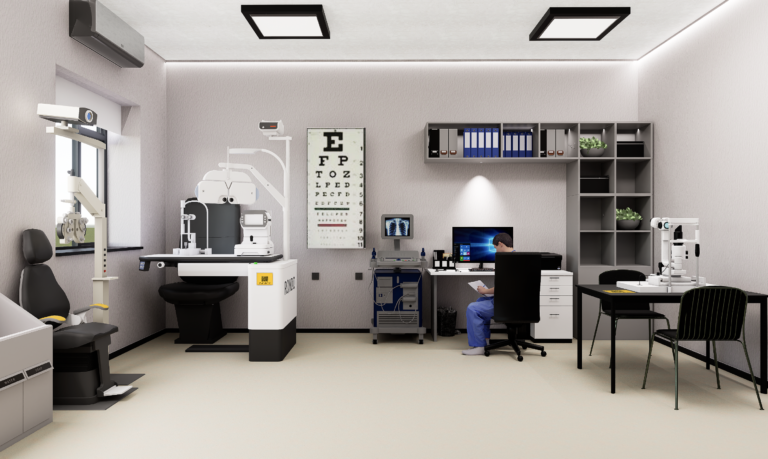
Sensory rehabilitation (hearing and vision). An area whose relevance has grown particularly as a result of the war: training in spatial orientation, use of assistive devices, development of communication skills, and support for returning to everyday activity. The regional need is 1 510–1 610 unique patients per year: acoustic barotrauma (750–850), combat and domestic injuries of the eye and orbit (about 350), acute vascular vision loss (about 110), and severe chronic conditions such as diabetic retinopathy and glaucoma (about 300). The Center plans to receive 400–450 patients in the outpatient wing (~600 cycles per year).
Orthopedic and sensory rehabilitation are forecast to show the highest growth rates: pre-prosthetic care and outpatient hearing- and vision-loss adaptation are the main social challenge in the return of veterans and civilians to a full life.
Oncological rehabilitation. A new, highly demanded profile: restoring physical endurance, functional capacity, and quality of life for patients during and after treatment, with appropriate psychological support. More than 41 000 cancer patients are registered in the oblast, and the incidence of breast cancer and other malignant neoplasms exceeds the average for Ukraine by 46%. The Center plans to help 250–300 patients per year: after mastectomy (about 140), after radical gastrointestinal surgery, including with stomas (about 90), and with an oncogynecological profile (about 70). The introduction of treatment for lymphedema and psycho-oncology will close the acute shortage of these services at the city level.
The task of the Center is not to replace specialized institutions but to complement the regional healthcare system with services for which accessible pathways of care need to be created. Special attention will be paid to barrier-free design, accessibility for people with mobility impairments, a safe therapeutic environment, and the involvement of the family in the recovery process.
Integration into the hospital structure: a single patient pathway
The Center is being created not as a separate institution from scratch but as an organic continuation of the existing hospital. This approach ensures continuity of care and efficient use of available resources.
| Stage of the pathway | Where it takes place |
| 1. Acute period | Stroke, Reperfusion, and Arrhythmological Centers; neurosurgical, traumatology, and other surgical wards |
| 2. Start of rehabilitation | Existing inpatient (30 beds) and outpatient wards of medical rehabilitation |
| 3. Main subacute stage | The Center’s inpatient unit (~105–130 beds), five specialized areas |
| 4. Outpatient stage | The Center’s outpatient rehabilitation and sensory wing, the hospital’s consultative outpatient clinics |
| 5. Return to independence | Training in daily living skills, psychological support for patients and families |
Integration gives the Center four advantages:
Why invest in this hospital
An investment decision must take into account not only the relevance of the need but also the institution’s capacity to implement the project, integrate it into the healthcare system, and deliver long-term public value.
| Prerequisite | Confirmation |
| Established clinical base | Stroke, Reperfusion, and Arrhythmological Centers, neurosurgery, orthopedics and traumatology, powerful diagnostics — the basis of a comprehensive patient pathway |
| Team and experience | 827 employees, 32 rehabilitation specialists, an operating Rehabilitation Ward (978 inpatients and 799 outpatients in 2025) |
| Alignment with the region’s needs | Combat injuries, amputations, strokes, cardiovascular and oncological diseases |
| Proven resilience | Uninterrupted operation since 2022, more than 5 000 military personnel among patients, 500 civilians with “military” injuries |
| Own investments in development | Modernization, new areas, and modern technologies introduced with the hospital’s own resources |
| Long-term public value | People’s return to independence, reduced dependence on outside care, benefits for families, employers, hromadas and the healthcare system |
The hospital’s main limitation today is not a lack of need, experience, or professional motivation, but insufficient infrastructure to realize its existing medical potential. Investment is needed in order to:
We are asking you to support not merely construction or equipment. We propose that you invest in completing the patient’s medical pathway — from saving a life to the fullest possible recovery.
Expected results
The creation of the Center will establish a new level of specialized care on the basis of an already operating multidisciplinary institution:
| For whom | What the project means |
| The region | Specialized infrastructure that will work both in wartime and during Ukraine’s recovery |
| The hospital | Realization of professional potential, new areas, a more complete cycle of care |
| The patient | A chance to go from treatment to recovery closer to home, near loved ones, in a professional therapeutic environment |
| The family | Support and the opportunity to take part in the recovery of a loved one |
| Society | Preservation of human potential, independence, and quality of life for people who have survived illness, injury, or the consequences of war |
An investment in the future of Sumy oblast
Sumy central city clinical hospital has already proven its importance for Sumy city hromada. More than half a century of experience, a powerful professional team, complex medical areas, high workloads, and resilience during the war are the foundation on which we are ready to build the next stage of development: moving from the existing rehabilitation capacity to a modern regional center that will meet the needs of patients and the challenges of the times.
We are open to cooperation with public authorities, local self-government, international partners, institutional investors, and charitable organizations interested in developing Ukraine’s medical infrastructure. We are offering a project with a clear public purpose that builds on the existing clinical base and meets the long-term needs of the region. This project expands the functional capacity of the regional healthcare system and creates new pathways of rehabilitation care for people whose needs are not sufficiently met today.